
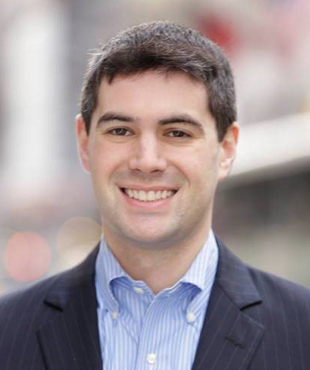
Mike is an appellate lawyer with a wide range of experience in both civil and criminal litigation. He has written hundreds of appellate briefs and presented dozens of oral arguments in federal and state appeals courts throughout the country. Mike is routinely hired not only for traditional appeals, but also to handle legal strategy and appellate preservation at the trial level, including arguing motions, instructions, and jury selection issues. Mike has worked on more than thirty trials in that role, representing Meta, Philip Morris, Monsanto, and J&J, among other clients.
Mike’s work extends across many jurisdictions and substantive areas. He has briefed and argued appeals in seven of the federal circuit courts, with a focus on questions of data privacy, product liability, class certification, due process, standing, preemption, and excessive punitive damages. In data privacy litigation, for example, Mike has won multiple Ninth Circuit appeals defending Meta’s advertising technologies and facial-recognition software, and a Third Circuit appeal defending a healthcare provider’s pixel technologies. In product liability cases, Mike prevailed most recently in a Florida appeal of a $43 million wrongful-death award against Philip Morris. In the last two years, Mike has argued and won a First Circuit appeal defending Volvo’s nationwide prepaid maintenance plans, and a New York First Department appeal in a professional malpractice suit against a sophisticated accounting firm.
Mike devotes a large part of his practice to people facing threats to their life or liberty. He has represented clients convicted of murder, sexual assault, robbery, drug trafficking, and firearms charges, as well as immigrants facing deportation for criminal offenses. Mike has had successes in these areas, including an opinion by the Second Circuit vacating a client’s conviction for murder-for-hire; a Fourth Circuit opinion ordering the suppression of evidence obtained through an unconstitutional military search; and an Eleventh Circuit opinion granting habeas relief to a death row inmate because of the prosecutor’s racial discrimination during jury selection. Mike also works with clients seeking executive clemency; in 2024, one of Mike’s clients was granted a commutation of his federal death sentence.
Mike received his J.D. with high honors from The University of Chicago Law School, where he was a comments editor on the Law Review. After law school, Mike clerked for Judge Jay Bybee in the Ninth Circuit Court of Appeals, and then for Judge Nicholas Garaufis in the Eastern District of New York. Before joining Shook, Mike was a partner at Mayer Brown LLP and an associate at Cravath, Swaine and Moore LLP. Law360 has named Mike a “Rising Star,” explaining that he “has amassed victories for Facebook and other companies over a career that has also been marked by his dedication to pro bono work.”
Recent Appellate Wins (last two years)
Sockwell v. Commissioner, Alabama Department of Corrections, 141 F.4th 1231 (11th Cir. 2025): Briefed and argued appeal on behalf of a client on death row who had been convicted of murder for hire in 1990. The Eleventh Circuit reversed the district court’s denial of a writ of habeas corpus, holding that the client’s conviction was unconstitutional because the prosecution had engaged in racial discrimination during jury selection. The court ruled that the Alabama Supreme Court’s contrary decision was an unreasonable application of clearly established federal law under the Antiterrorism and Effective Death Penalty Act of 1996 (AEDPA).
Santoro v. Tower Health, F.4th, 2026 WL 2543842 (3d Cir. 2026): Briefed and argued appeal on behalf of a healthcare provider against a privacy-based challenge to its use of advertising technologies. The plaintiffs claimed that the defendant’s websites used tracking code that shared the plaintiffs’ identifying information with Meta. The Third Circuit affirmed the district court’s dismissal of the case with prejudice for failure to state a claim.
United States v. Ray, 141 F.4th 129 (4th Cir. 2025): Briefed and argued appeal on behalf of a defendant accused of sexual abuse of a minor. The Fourth Circuit held that a search of the defendant’s phone was unconstitutional and that the good-faith exception to the exclusionary rule did not apply, requiring the suppression of evidence found on the defendant’s phone. The government then voluntarily dismissed the federal charges.
Island Consolidated v. Grassi & Co., 239 A.D.3d 443 (N.Y. App. Div. 1st Dep’t 2025): Briefed and argued appeal on behalf of a group of companies alleging professional malpractice against a large accounting firm. The First Department held that the plaintiffs’ suit was not barred by either the parties’ engagement letters or the statute of limitations.
Philip Morris USA Inc. v. Lipp, 423 So. 3d 522 (Fla. 3d Dist. Ct. App. 2025): Briefed appeal of a $43 million judgment against a tobacco company. The appellate court reversed and remanded for a new trial, holding that the trial court had improperly admitted hearsay testimony.
Colony Place South v. Volvo Car USA, 121 F.4th 973 (1st Cir. 2024): Briefed and argued appeal in which two car dealers alleged that Volvo’s nationwide, prepaid maintenance plans violated Massachusetts law. The district court granted summary judgment and the First Circuit affirmed, holding that the maintenance plans were not regulated by the Massachusetts Motor Vehicle Act.
Doe v. Garland, 2024 WL 2153511 (2d Cir. 2024): Briefed appeal on behalf of an immigrant facing deportation to Mexico. The Second Circuit vacated the order of removal. It held that the government had to reconsider the client’s claim that, if forced to return to Mexico, he would be tortured by members of a notorious drug cartel.
Sommers v. Philip Morris USA Inc., 388 So. 3d 256 (Fla. 3d Dist. Ct. App. 2024): Briefed appeal about the scope of Florida’s bar on successive punitive damages awards. The appellate court affirmed the district court’s grant of summary judgment in the client’s favor, holding that plaintiff’s punitive damages claim was barred.