
Court Puts New Mexico PFAS Labeling Rule on Hold, California Enacts PFAS Pesticide Tracking Law, and Court Decision Upholding Oregon's EPR Framework Heads to Appeal.
Monthly newsletter Material Concerns: Legal Updates on Substances of Emerging Concern keeps clients informed on the latest legal, regulatory and scientific developments related to substances of emerging concern. Each issue delivers concise, actionable insights to help companies navigate the evolving landscape of environmental law.

Court Puts New Mexico PFAS Labeling Rule on Hold Over First Amendment Concerns
By Kate Klaus
A federal court has preliminarily barred New Mexico from enforcing its PFAS labeling requirement while an industry challenge proceeds. American Chemistry Council v. Kenney, No. 1:26-cv-02130-MIS-SCY (D.N.M. Sept. 16, 2026).
In July, the American Chemistry Council and eight other industry associations brought suit in New Mexico federal court to block implementation of New Mexico’s PFAS labeling rule ahead of its January 1, 2027, effective date. The rule at issue would require consumer products containing intentionally added PFAS to bear a disclosure label featuring an Erlenmeyer flask marked “PFAS.”
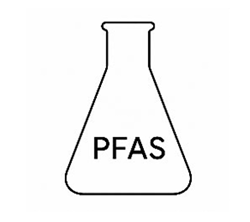
The lawsuit challenges the labeling requirement on U.S. constitutional grounds, including alleged violations of the First Amendment and the Commerce Clause. Alongside the complaint, the plaintiffs moved for a preliminary injunction, asserting that the requirement impermissibly compels commercial speech.
On September 16, the U.S. District Court for the District of New Mexico granted the plaintiffs’ request. The court evaluated the labeling requirement under the Supreme Court’s framework for compelled commercial disclosures. Under that framework, the government may require a disclosure of purely factual and uncontroversial information only when the requirement is reasonably related to the government’s asserted interest.
In its briefing, the state “repeatedly disavow[ed] that the PFAS label constitutes a warning,” and emphasized that it conveys no information about “PFAS’ effect on the environment or consumer health.” While this argument served to show the label is factual and uncontroversial, it had the opposite effect in determining the fit between the label and New Mexico’s stated interests in protecting consumer health, safety and the environment.
Because the label identifies only the presence of PFAS and communicates nothing about alleged risks or harm, the court determined it was not “a rational vehicle to achieve the goals of protecting consumer and environmental health.” Rather, the label served only to satisfy “mere consumer curiosity,” which the court noted is not a sufficient government interest to justify compelled speech. Accordingly, the court found that New Mexico’s PFAS label is likely unconstitutional.
The case will now proceed on the merits while the labeling requirement is on hold. New Mexico is also reportedly considering revising the rule in light of the court’s holding, and anticipates announcing next steps by November.
As New Mexico considers its options, the court’s opinion appears to leave open the possibility that a differently framed disclosure requirement could withstand constitutional scrutiny. In a footnote, the court noted that “if the Defendants were to mandate a warning label in order to protect consumer health and safety, those are legitimate state interests.” At the same time, the court emphasized that it was expressing no view on whether any hypothetical warning label would satisfy First Amendment scrutiny.
Regardless of how the litigation ultimately unfolds, the court’s decision is limited to the labeling requirement and does not affect New Mexico’s broader phase-out of consumer products containing intentionally added PFAS. That phase-out will begin on January 1, 2027, with a ban on the sale of cookware, food packaging, dental floss, juvenile products, and firefighting foam.
California Enacts PFAS Pesticide Tracking Law
By Jennifer E. Hackman
California has taken a significant, although narrower-than-originally-proposed, step toward regulating PFAS in pesticides. On September 27, 2026, Governor Gavin Newsom signed Assembly Bill 1603, authored by Assemblymember Nick Schultz, requiring the California Department of Pesticide Regulation (DPR) to publicly identify registered pesticides containing intentionally added PFAS ingredients and incorporate PFAS information into the state’s pesticide-use reporting system beginning no later than 2028. The measure was enacted as Chapter 531 of the Statutes of 2026.
For pesticide manufacturers, registrants, agricultural businesses, food companies, and others in the supply chain, the most important feature of AB 1603 may be what the final legislation does not do. Earlier versions contemplated restrictions on registration, permitting requirements, and ultimately prohibitions on pesticides containing intentionally added PFAS. Those provisions were removed before enactment. As enacted, AB 1603 is principally a reporting and transparency law rather than a direct product ban. But the information it requires DPR to assemble could provide the infrastructure for future regulation, enforcement scrutiny, and private litigation.
AB 1603 adopts a relatively broad definition of PFAS: a class of fluorinated organic chemicals containing at least one fully fluorinated carbon atom. It separately defines “PFAS pesticide ingredients” as PFAS intentionally added to a pesticide as an active, adjuvant or inert ingredient.
By January 1, 2028, or upon publication of DPR’s pesticide-use database containing 2026 data, whichever occurs first, DPR must identify pesticides containing PFAS pesticide ingredients in its public pesticide-use reporting database, establish PFAS as a searchable “category of interest,” and incorporate PFAS pesticide-use trends into its annual and other relevant pesticide-use reports. DPR must continue this reporting annually.
DPR also must publish, by January 1, 2028, a list of all registered pesticides containing PFAS pesticide ingredients and provide that list to each county agricultural commissioner. Thereafter, whenever DPR registers another pesticide containing a PFAS pesticide ingredient, it must update the public list and distribute the update to county commissioners within 60 days.
The enacted statute does not expressly impose new labeling requirements, create a PFAS-specific permit requirement, prohibit the use or sale of PFAS-containing pesticides, or direct DPR to cancel existing registrations.
Earlier versions of AB 1603 would have gone substantially further. At various stages, the legislation would have prohibited DPR from registering new pesticides containing intentionally added PFAS, designated PFAS-containing pesticides as restricted materials requiring county permits, prohibited certain PFAS pesticides beginning in 2030, and ultimately prohibited pesticides containing intentionally added PFAS more broadly beginning in 2035.
Those restrictions encountered substantial opposition from agricultural producers, pesticide manufacturers, pest-management organizations, and other industry groups. Opponents argued, among other things, that fluorinated pesticide chemistries should be assessed individually through California and federal pesticide-registration processes rather than regulated categorically as PFAS, and that broad restrictions could eliminate important pest-management tools and encourage substitution with older or less targeted chemistries. The legislature ultimately removed the proposed bans and registration restrictions before passage.
Because AB 1603 primarily directs DPR, rather than regulated entities, to compile and publish information, its immediate enforcement consequences are comparatively limited. The final statute does not include the PFAS-specific sales prohibitions and use restrictions that appeared in earlier drafts. Nevertheless, by creating a publicly accessible inventory of pesticides containing intentionally added PFAS and integrating PFAS information into California’s pesticide-use reporting system, AB 1603 may lay the groundwork for future regulatory, legislative, enforcement and litigation activity in this area.
Federal District Court Decision Upholding Oregon Extended Producer Responsibility Framework is Heading Toward Appeal
By Joseph Zaleski
The National Association of Wholesaler-Distributors (NAW) has filed a notice of appeal to the U.S. Court of Appeals for the Ninth Circuit contesting an Oregon federal district court decision upholding the state’s packaging/plastics Extended Producer Responsibility (EPR) program against constitutional challenges.
In late August, a judge from the U.S. District Court of Oregon issued an opinion rejecting NAW’s constitutional challenges to the state’s EPR law based on alleged Dormant Commerce Clause and Due Process violations. This decision followed a five-day bench trial in July that focused on those claims and came after the court had granted a narrow injunction earlier in 2026 pausing the Oregon EPR program’s applicability as to NAW and its members. The case marks the first time a court has weighed in on the constitutionality of these novel packaging/plastics EPR laws. Similar programs are now in effect in seven states, and several other state legislatures are actively considering comparable legislation.
While the August opinion is limited to Oregon’s EPR program, it has the potential to impact other similar state EPR programs, including those in California and Colorado, that are also currently being challenged in federal district court. Litigation involving those state EPR programs is also focused on similar federal and state constitutional claims. Any decision from the Ninth Circuit on NAW’s appeal would also be binding on other states with EPR programs in that jurisdiction, such as California and Washington. Still, other states, including Minnesota, Maryland, and Maine, are proceeding with implementation of their own packaging/plastics EPR programs, which have not yet been challenged in court.
In general, these state packaging/plastics EPR programs require producers of products sold or distributed into the state to annually report sales and packaging-volume data so that the producer can be assessed and pay program administration fees to offset state and local waste management and recycling costs. Producers must also join a third-party producer responsibility organization that works with state regulators to administer the program. Penalties for noncompliance in several EPR states can be significant, with some state programs authorizing substantial fines that can be imposed for each day of continuing failure to comply. Because the state laws share many common features, judicial opinions in any of these jurisdictions will likely have impacts beyond the individual state. And if another court reaches a contrary conclusion on these key constitutional claims, the likelihood of U.S. Supreme Court review would increase. A split of authority could also renew interest among federal lawmakers and regulators in establishing a nationwide EPR standard for packaging/plastics.